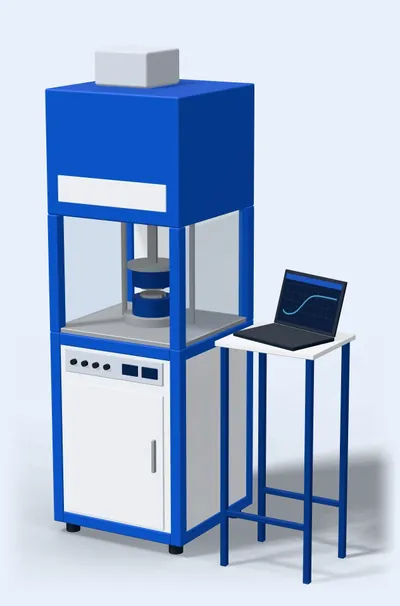
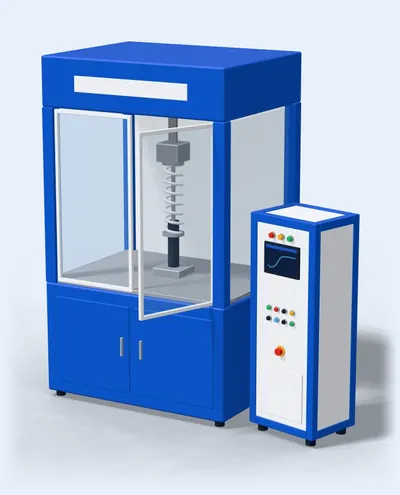
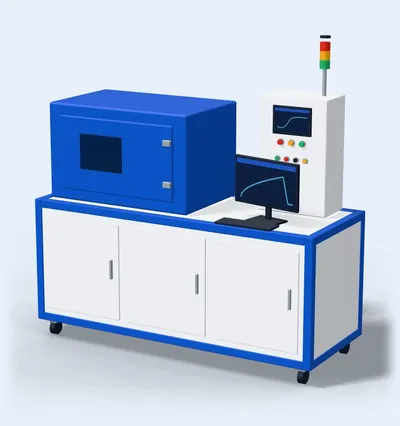
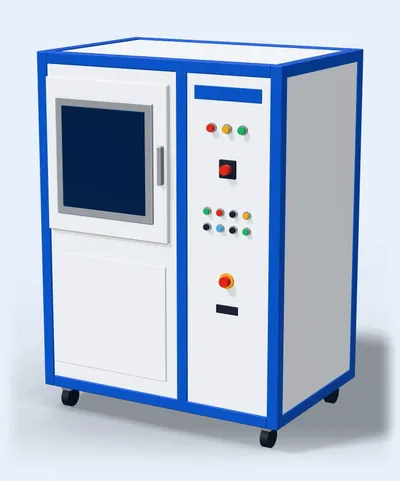
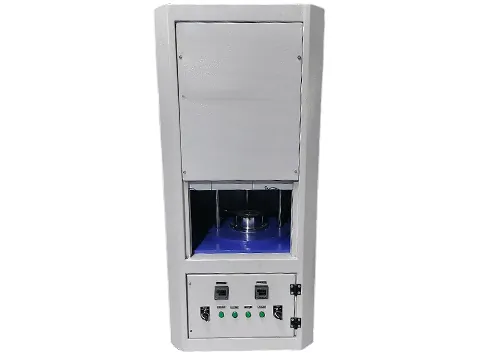
Moving Die Rheometer (MDR)
Rotorless cure meter for fast, precise cure curves of rubber compounds in QC and R&D labs.
What you get from one test
The machine records torque against time while the compound cures between the dies. The sample sits in a sealed cavity between two heated dies, one of which oscillates. With no rotor to heat up, the sample reaches test temperature quickly and the torque signal is free of slippage.
Viscosity of the uncured compound.
How long the compound stays safe to process.
Time to reach 90% of the torque rise.
Stiffness of the fully cured compound.
Key features
Sealed, rotorless dies
The compound is held in a closed cavity, so the torque signal is clean and repeatable from batch to batch.
Closed-loop die heating
Both dies are heated and controlled, so every sample sees the same temperature.
Live cure curve on the PC
The software plots torque against time as the test runs and prints the batch report.
Built to your standard
Fixtures, ranges and the test sequence are configured for the method you follow.
How it works
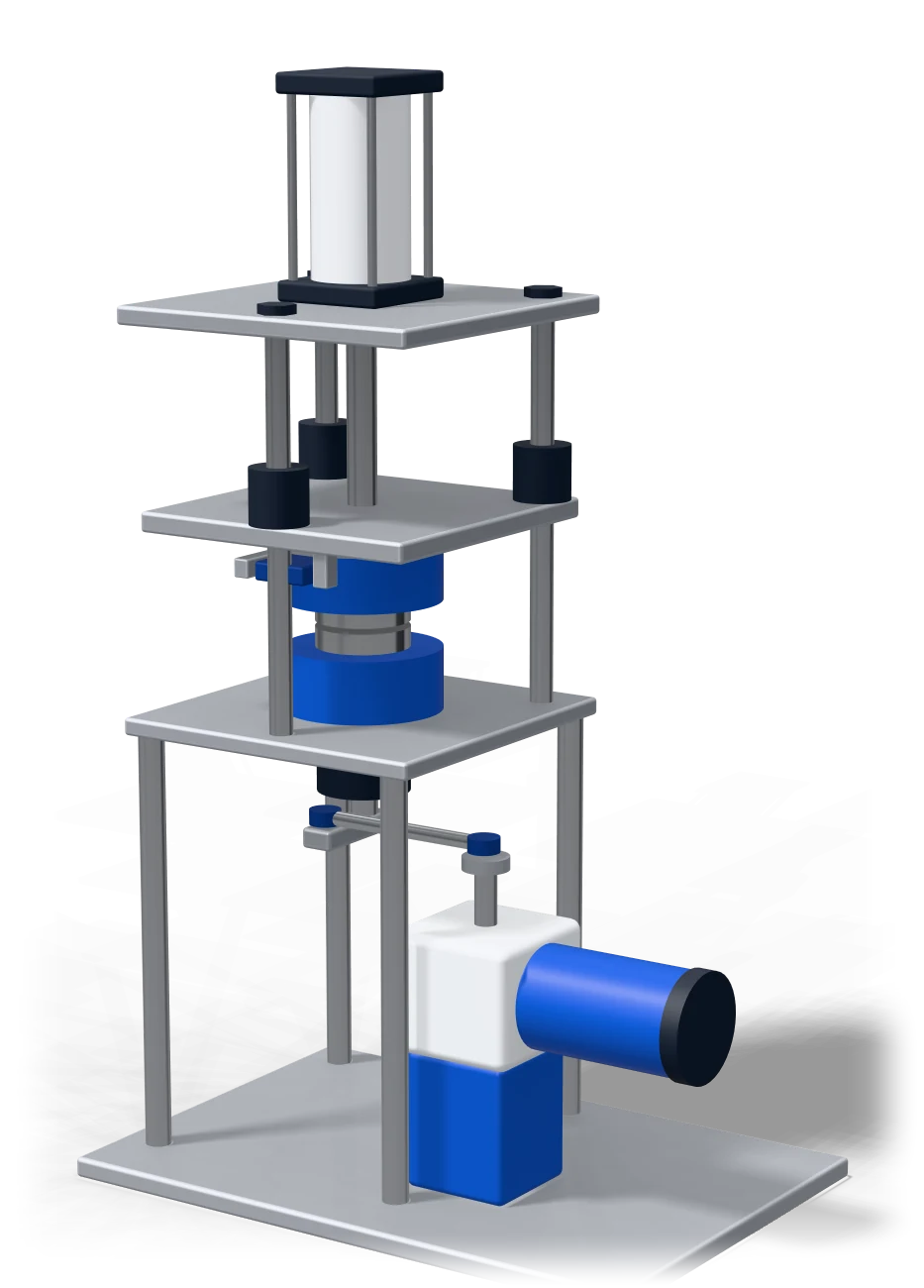 1234
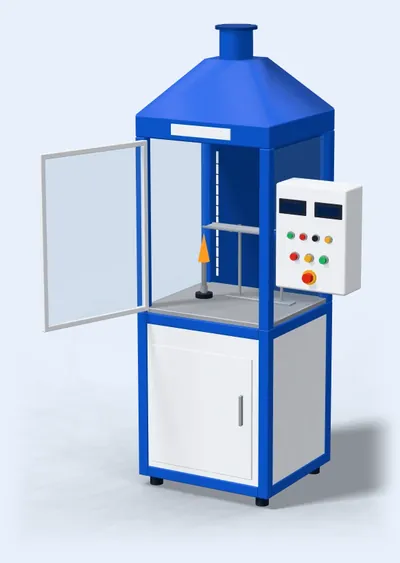
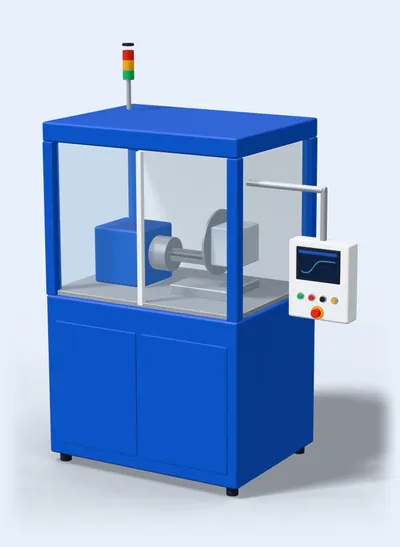
Die station, 3D illustration
- 1Pneumatic closingAn air cylinder closes the dies on the sample with the same force every time.
- 2Torque load cellThe upper die is held by a load cell, which reads the reaction torque of the compound.
- 3Heated diesTwo heated dies form the sealed cavity. The lower die oscillates through a small angle.
- 4Oscillating driveA motor, gearbox and crank link turn rotation into a steady oscillation.
MDR, ODR or Mooney viscometer?
Three instruments, three questions. Most compounding labs run a cure meter and a viscometer side by side.
Moving Die Rheometer (MDR)
- What it measures
- Cure curve: ML, MH, ts2, t90
- How the sample is tested
- Between two dies; the lower die oscillates
- Test methods
- ASTM D5289, ISO 6502-3
- Choose it when
- You want fast, repeatable cure data for QC and R&D
Oscillating Disc Rheometer (ODR)
- What it measures
- Cure curve: ML, MH, ts2, t90
- How the sample is tested
- A biconical disc oscillates inside the sample
- Test methods
- ASTM D2084, ISO 3417
- Choose it when
- Your customer specifies an oscillating disc method
Mooney Viscometer
- What it measures
- Mooney viscosity, scorch, stress relaxation
- How the sample is tested
- A rotor turns at constant speed in the sample
- Test methods
- ASTM D1646, ISO 289
- Choose it when
- You check how raw polymer and compound will process
Specifications
Test parameters
- Oscillation angle
- ±0.5°
- Die temperature
- Up to 200 °C
- Torque range
- 0–50 dN·m
- Test time
- Up to 120 minutes
Machine
- Control system
- PLC with HMI touch panel
- Software
- PC software with live cure curve and reports
- Power
- 2 kW, single or three phase
- Test methods
- ASTM D5289, ISO 6502-3
Each machine is configured for the specimen and the standard you follow. Mention them in your enquiry and we will send a specification with the quotation.
Moving Die Rheometer (MDR): questions buyers ask
Not sure which machine fits your test? Call an engineer on +91 98500 35112.
What is the difference between an MDR and an ODR?
An MDR is rotorless: the sample sits between two dies and one die oscillates. An ODR oscillates a biconical disc inside the sample. The MDR heats the sample faster and has no rotor friction; the ODR is still specified by customers who follow ASTM D2084.
Which test standards does the MDR follow?
ASTM D5289 and ISO 6502-3 for rotorless cure meters. Tell us the method you follow and we configure the machine for it.
What does t90 mean on the cure curve?
t90 is the time taken to reach 90% of the torque rise between ML and MH. It is used as the optimum cure time for the compound.
Do you install the machine and train our operators?
Yes. We install and commission the machine at your site and train your operators. Service comes from the same team in Pune that built it.
Need an MDR for your lab?
Three details are enough for us to start:
- The part, compound or specimen you test
- The test standard or method you follow
- The ranges you need and the tests you run per day
What happens next
- 1An engineer reads your requirement and calls if anything is unclear.
- 2We propose a machine configuration for your specimen and standard.
- 3You receive a quotation with scope, delivery time and support terms.